
Sentiment Analysis Didn't Start With ChatGPT
Prompting an LLM for sentiment is easy. Designing a reliable sentiment intelligence system with taxonomy, scoring, and longitudinal trends is the real work.
Executive Key Takeaways
- Sentiment analysis architectures—ingestion, deidentification, taxonomy management, and textual ETL—existed well before ChatGPT.
- Asking an LLM "what is the sentiment of X?" is a shortcut for an MVP, not a production sentiment intelligence system.
- Commercial reliability requires system design: consistent signal retrieval, governed taxonomies, and comparable trends across time.
- AI accelerates individual building blocks so teams can focus on business fit rather than low-level plumbing.
I keep reminding people who are excited too much by some AI capabilities that “Sentiment analysis didn’t start with ChatGPT.” And some people are still surprised by this.
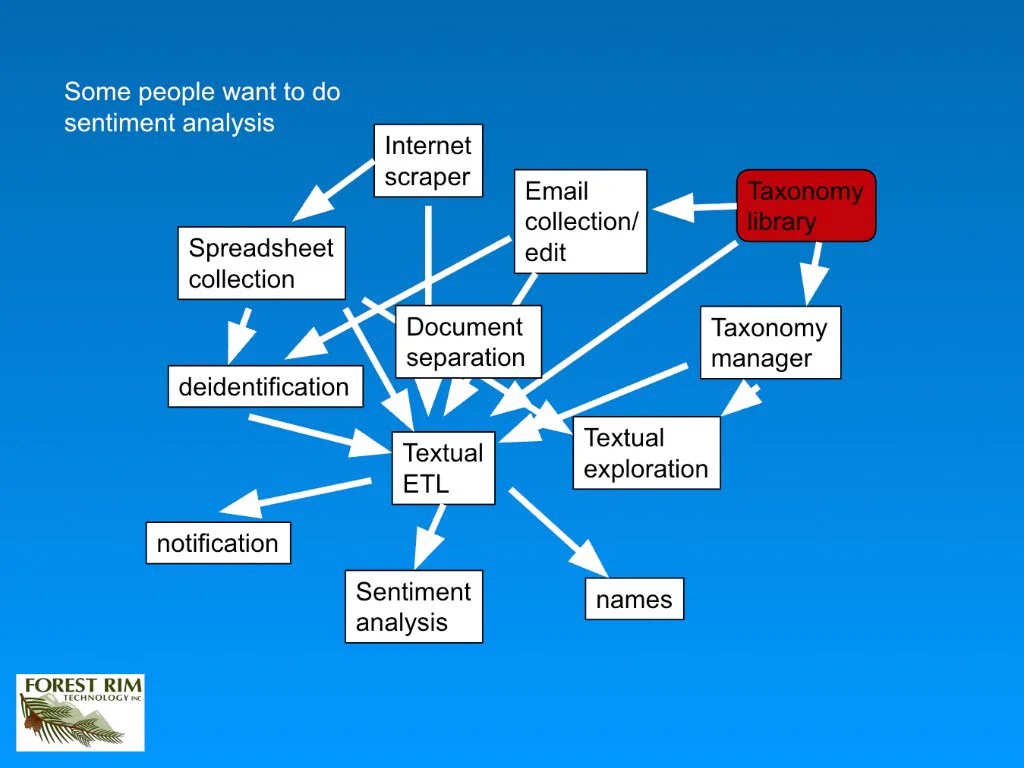
While searching through my old docs for a new project, I stumbled across this slide from a Bill Inmon training session (for those who don’t know, Bill Inmon is called the father of data warehousing solutions) that I attended in November 2020 — 6 years ago.
Here it is… sentiment analysis in full design, before the AI era. ChatGPT was probably just an early concept back then, and businesses could already analyse feedback, identify recurring topics, and track positive or negative sentiment. Voilà!
Using AI vs. Designing an AI Solution
My point here is not that you should not use AI to perform sentiment analysis, because I’ve also been doing it this way in my recent projects and in my previous startup, as it’s much easier to set up and build on top of an LLM API, and much more universal in its performance for your MVP phase than going straight into specialised machine learning solutions. Yes, anyone remember ML? Hello?
My point is actually that we tend to forget that many AI capabilities existed before ChatGPT and Claude, but “using AI for sentiment analysis” is different from “designing an AI solution for sentiment analysis.”
The first one is just asking AI “what is the sentiment of X”, and the latter is actually building an entire system of sentiment signal management, scores, taxonomy, and building trends on top of it to really measure sentiment over time — with confidence that the signal retrieval methods guarantee we’re looking at the same sentiment context across time.
The Same Goes for “AI Automation”
The same goes for so-called “AI automation.” Most of it is just “if-then” statements wrapped around an LLM, where solutions like Zapier have been with us for over a decade now.
But still, “using AI automation” is different from “designing AI automation” for a specific use case and making it continuously reliable. Again, the latter requires much more “classic knowledge” of how automations really work and some knowledge of how algorithms work to make them efficient and actually work really well.
Back to Sentiment Analysis: The 6-Year-Old Design
When we think of an entire sentiment tracking and detection system, nothing really changed much. The design below from 6 years ago may still apply. What has changed are the implementation shortcuts AI provides in each of these building blocks, so we can focus on how good the solution is for business needs rather than focusing on how to make it work in general.
So, My Point Is…
Many things we do with AI were doable before the AI era, including sentiment analysis. AI is a convenient shortcut to achieve the goal of “making it work”, but still, designing real commercial solutions with AI requires the skill of “design” to separate the wheat from the chaff.
Explore Related Capabilities
More from Signalia Studio Insights
How to Extract Customer Signals from Reviews and Conversations
Moving beyond star ratings and generic sentiment tags: how structured signal extraction uncovers actionable operational priorities.
Experience ImprovementWhy Sentiment Analysis Alone Is Not Enough
A positive review can hide severe friction, while a 1-star complaint often contains actionable product advice. Here is why context-aware intelligence matters.
Ready to Extract Verified Signals from Your Data?
Signalia Studio configures data pipelines and taxonomy around your business operations.